
ARUN Newsletter – Issue 5
ARUN Newsletter – Issue 5


Thank you very much for your continued support of ARUN.
We are pleased to share with you ARUN Newsletter – Issue 5, sharing updates from our activities and initiatives.
Contents
1. Join Our Mission to Protect Water
2. 【Activity Report】ARUN DOJO
“A Drop That Nourishes the World” —
Become a Crowdfunding Supporter Who Walks Alongside Social Entrepreneurs

ARUN Seed has launched its seventh crowdfunding campaign.
With generous support from Readyfor once again, we are taking on one of the biggest challenges in ARUN Seed’s history: raising 8 million yen by June 21.
In this article, we would like to share the discussions and reflections that led us to dedicate this crowdfunding campaign to supporting entrepreneurs who are working to preserve water for future generations.
The CSI Challenge: A Core Initiative of ARUN Seed
For ARUN Seed, the CSI Challenge business competition is one of our most essential initiatives.
The CSI Challenge begins by calling for applications from entrepreneurs around the world. Through connections with organizations, entrepreneurs, and social media networks across many countries, we invite innovators to join the competition. Through ongoing dialogue with these entrepreneurs, we help nurture and strengthen their businesses, while building partnerships aimed at creating a better world together.
Entrepreneurs working tirelessly to solve local issues in overlooked corners of the world are constantly searching for meaningful partners. ARUN Seed prepares investment capital and reaches out to them. We listen carefully to the voices of those who respond, extend our hands toward them, and continue accompanying them until we can become trusted and empowering partners standing by their side.
To date, ARUN Seed has invested in 12 companies. We continue to hold regular meetings with five entrepreneurs, engaging in ongoing conversations about business direction, implementation strategies, and management. ARUN Seed’s members themselves balance these activities alongside their own jobs and family lives. While making the most of limited time, we continue discussions with entrepreneurs and among ourselves, accompanying their growth and their efforts to solve social issues.
Themes of the CSI Challenge
Over the years, the CSI Challenge has invited entrepreneurs working on themes such as:
- Innovative development approaches that contribute to future generations in alignment with the SDGs
- Empowerment of vulnerable people affected by the COVID-19 pandemic
- Gender-related social issues
- Innovative approaches to biodiversity conservation
- Building harmonious coexistence between people and nature
Across these themes, we have received more than 500 applications in total, and with this year included, the number now exceeds 600.
As we discussed this year’s theme, we naturally considered what kind of theme would encourage entrepreneurs to apply. But more importantly, we focused on a deeper question:
What issues do we truly want to confront?
One major pillar was our shared desire to pass on a better world to the next generation.
ARUN Seed’s members come from highly diverse backgrounds. Some are high school students. Others are retired bankers who once worked globally for many years, active lawyers currently at the forefront of their professions, or staff members of international organizations. Some manage households full-time, while others are new parents navigating childcare. People from many walks of life gather together, discuss openly across differences, make decisions, take action, influence society, and grow through mutual inspiration.
In many ways, this resembles the flow of water itself: streams gathering from different places, merging together, and eventually flowing into the great ocean. Water creates waves, rises into the sky, returns as rain, and nourishes the earth and all living things once again.
Like a single drop of water, each individual effort may seem small, yet becomes powerful when joined together. Water became the symbol of what we aspire to be, and we came to believe that this movement itself should be carried forward to future generations.
The second pillar, of course, was the social issues themselves.
As we wrote on the main campaign page, one topic repeatedly surfaced in our discussions: environmental degradation. As the United Nations has warned, “water bankruptcy” is becoming a severe issue in many regions around the world.
Many refugee crises are rooted in the deterioration of living conditions caused by water scarcity. Numerous communities depend heavily on groundwater, leading to land subsidence and threatening daily life. Oceans are polluted by plastic waste, glaciers are melting, and freshwater resources are diminishing. These global environmental crises are no longer distant problems unrelated to us.
As our discussions continued, some members shared deeply personal realizations. One member, through the hospitalization of a family member, came to understand that even IV drips used to sustain life are impossible without water. Others voiced concerns that even water for gardens or drinking could someday become difficult to access safely and fairly.
Through these conversations, our awareness deepened: water is a profoundly shared issue that connects all of us. We ultimately concluded that the entrepreneurs we most hope to encounter — and whose work we most want to pass on to the next generation — are those developing innovative technologies and systems to address these challenges.
Why We Are Launching This Crowdfunding Campaign
We are launching this crowdfunding campaign because we hope all of you will join us in supporting these entrepreneurs.
Even a single drop of water, when gathered together, can nourish the world.
We invite you to become one of those drops — joining together to create puddles, ponds, lakes, rivers, and eventually great oceans that generate waves, bring rain, and nourish people, ecosystems, and life both above and below the ground.
We would be deeply grateful for your support of this crowdfunding campaign and for sharing it with those around you.
Thank you very much for reading to the end.
If you are interested, please visit our crowdfunding site.
Here is how to translate the website from Japanese to English.
On a Computer (Chrome)
Method: Right-click to translate a website
1. Open the website.
2. Right-click on a blank area of the page.
3. Click “Translate to English” or “Translate to Japanese.”

1.【Activity Report】ARUN DOJO
Learning from Asian entrepreneurs in Tohoku
Among our dedicated readers, some of you may remember the article about ARUN DOJO’s learning journey to South India (September Issue 2025). In August of 2025, members of ARUN DOJO visited Real Eleco, one of the investors of ARUN Seed, where they experienced the local environment firsthand and deepened their learning together.
As part of the ARUN DOJO program held from February 23 to 27, the Global Knowledge Sharing initiative invited members from overseas to Japan for a learning journey that deepened mutual exchange and collaboration. You can take a glimpse of the trip through the blog of Mr. Tadano from Odaka Worker’s Base, who helped coordinate the program and participated in the trip alongside the group.
https://note.com/odakaworkers/n/nd4aba1f1c8c6
Visiting Tohoku fifteen years after the disaster, participants had the opportunity to meet up with local entrepreneurs. Here are some excerpts from their reflections, sharing what they felt and learned from the experience.
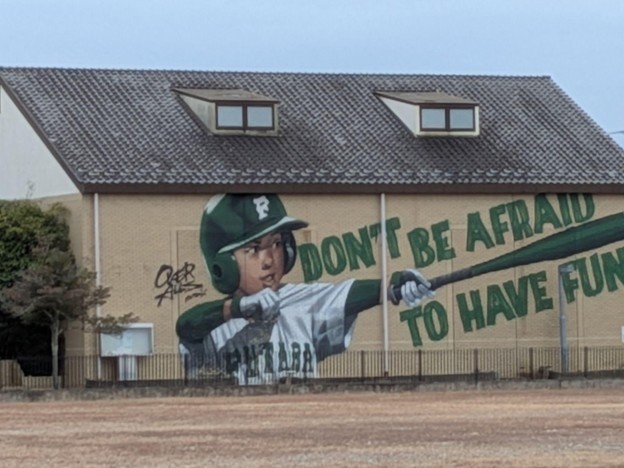
「When we got off the bus in front of the Tokyo Electric Power Company Decommissioning Archive Center, we were greeted by the internationally diverse members of ARUN Seed. We toured the facility with guidance in English. Afterward, I attended the Futaba Art District tour. There were many vacant lots in town, some of which were overgrown with weeds. I also saw an abandoned hospital. After Futaba town went through triple hardships of earthquake, tsunami, and nuclear contamination, I felt the road to recovery of the town is still a difficult one, even after fifteen years. However, the murals on the walls of houses in the town brought a sense of energy and hope.
After dinner, we listened to stories from Mr. Kobayashi at the ryokan and Mr. Nakasuji, the director of “Oretachi no Denshokan” (Our Tradition Museum). Their words left us with many meaningful insights that I will carry with me. I was also impressed by the members' positive attitude, who were eager to learn as much as possible.
I came to understand that ARUN Seed’s activities are not just about providing aid to our country, but also about supporting people so they can achieve economic independence.
I believe that unless we understand what strengths a country has and what its people truly aspire to, we cannot help unlock its full potential. Meeting Ms. Satoko Kono, the representative of ARUN Seed, made me feel that her inclusiveness and forward-looking vision are what make this possible.
I am deeply grateful for this valuable journey, which gave me important questions to reflect on as a person. Thank you very much.」
Michiko Koga(Participant)
【Photo】A mural from Futaba Art District. Filled with memories of the locals. Some of these murals may be torn down, but that is also part of the recovery process.
“It was a trip that changed my life. During the trip, I found courage in the choices and reasons of those who had returned here. Many problems and struggles we face are very local. We feel like they are the problem we face alone. However, when I met the people here, I realized how universal many of the challenges are.
I would like to bring back to my own community the idea I encountered in Fukushima: ‘Through many small businesses coming together, a stronger and more resilient town can be created.’ I also want to continue valuing connections with people across Asia and keep learning from businesses in other Asian countries.”
Tariq T(Co-founder and Art Director of the Elephant People)
https://www.therealelephant.com/
“My visit to Fukushima was an overwhelming experience. I truly felt the lives of the people there. The museum presented memories in a very beautiful way. I also met inspiring entrepreneurs committed to rebuilding their communities, placing sustainability and community at the center of their businesses. What was most memorable to me was not the tragedy itself, but the courage of the people who wanted to build, recover, and rebuild. Through many businesses, I learned that great results do not always come from grand actions. Sometimes, small and thoughtful steps taken by ordinary people can create real change.
Meeting participants from different countries was also a significant discovery. Despite our different backgrounds, I realized that many of the challenges we face are shared. Through this journey, we learned from one another, gained new perspectives, and deepened connections between our communities.”
Rinzing Choden Bhutia(Founder and CEO of Trateng Greens)
https://agapisikkim.com/
“The best part of this journey was connecting with local entrepreneurs who shared the same vision and are creating impact in their communities, and being able to share our experiences. Taking pride as citizens who contribute to solving social issues, redefining and reconstructing our roles in society, and envisioning future outcomes.
Vanda(Cofounder and CEO of Solo Landscapes)
https://sololandscapes.co/
Key takeaways from this journey: making things enjoyable; starting small but most importantly, starting. The power of connected storytelling to change negative perceptions. The role of art in healing communities, and museums in preserving memories. Creating change based on a sense of ‘awe’ and thinking deeply about what that truly means.
Melanie Mossard(Chief Impact Officer and former CEO of Impact Hub Phnom Penh )
https://phnompenh.impacthub.net/
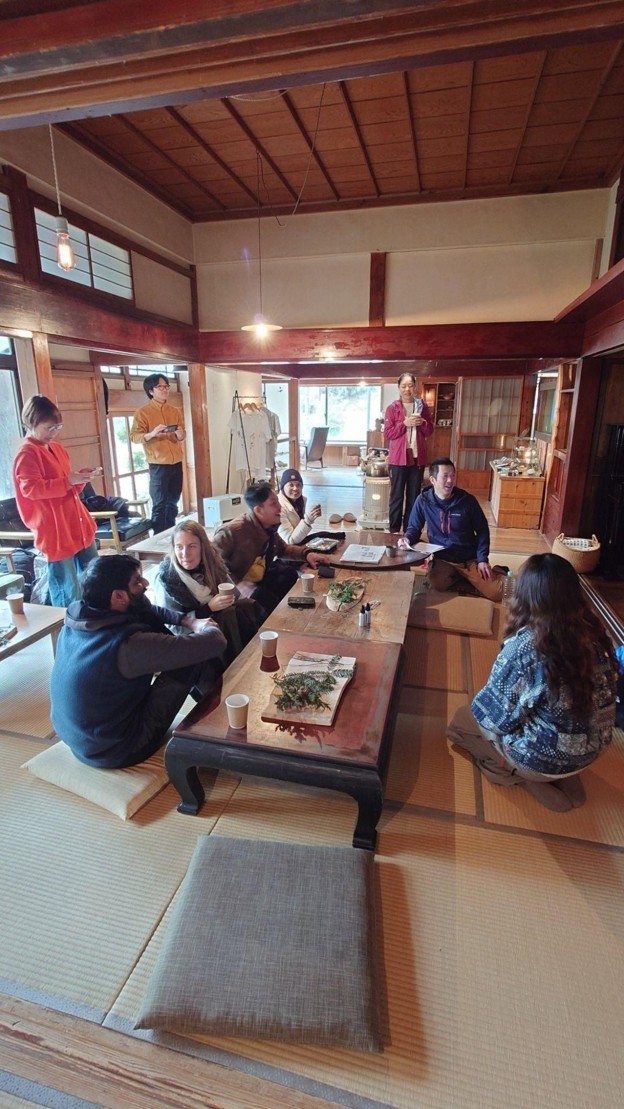
【Photo】Particpants chatting with entrepreneurs from Ishinomaki at a traditional Japanese house https://www.hamaguridou.com
“The phrase ‘First Penguin,’ shared by Mr. Wada, felt both bold and refreshing. I was deeply moved by the perspective of taking the leap, not simply restoring what existed before the disaster, but aiming for a self-reliant and resilient form of regional regeneration. For me, ARUN Dojo is ‘a journey of adventure and discovery!’
Shunichi Fukuda(Member of ARUN Seed)
“The place that left the strongest impression on me was Futabaya Ryokan. Although it was my first time staying there, it felt somehow nostalgic. Every morning, I enjoyed freshly cooked, steaming rice from Fukushima (I had many refills!) and miso soup full of vegetables. I could feel the warmth of the hostess and staff, and the power that comes from food and human connection. For me, ARUN Dojo is ‘a place of learning as human beings, beyond borders and cultures.’”
Sarah Atanacio(Member of ARUN Seed)
https://hopetourism-enjoyplus.jp/spot/disp.html?id=3
This program was made possible through the support of the Toyota Foundation and the many people who welcomed us in Tohoku. We would like to express our sincere gratitude.
*What is ARUN Dojo?
ARUN Dojo is a program that brings together leading social entrepreneurs from countries such as Japan, India, and Cambodia, along with participants interested in solving social issues in developing regions.
Over approximately 10 months, participants engage in online knowledge sharing and experiential learning programs, including visits to India. Together, they explore how to balance the economic returns generated by real businesses with the social impact of addressing local challenges through entrepreneurship.